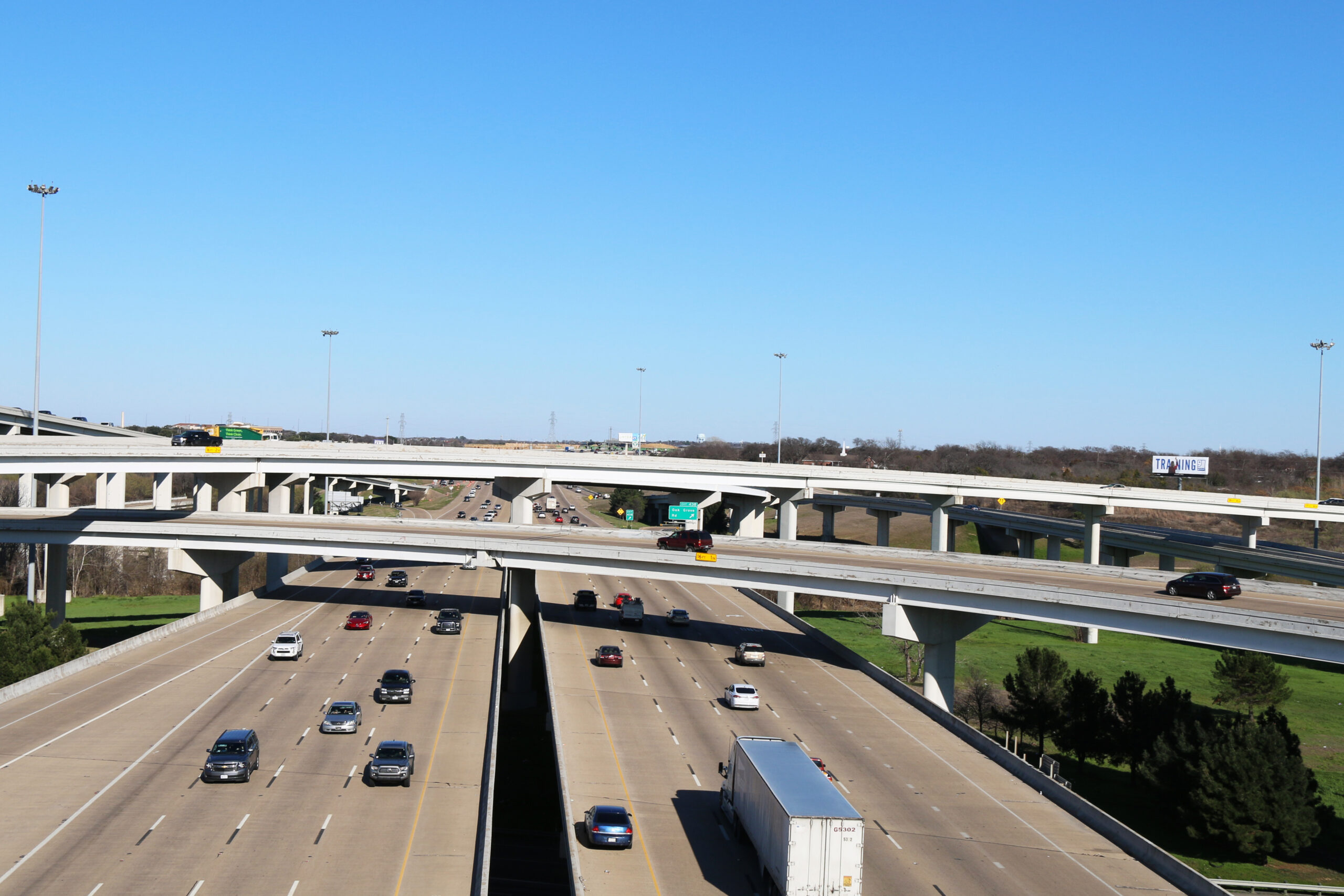
Anyone who has driven a California freeway knows the feeling of a loaded semi rolling alongside, and the lane the truck occupies matters more than most drivers realize. Under state law, large trucks must use a lane designated by posted signs or, when none is posted, the right-hand lane, with limited exceptions for passing, turning, and entering or exiting a highway.
At Callahan & Blaine, PC, we help people hurt in collisions with commercial vehicles, and our work on truck accident cases starts with understanding the rules truck drivers must follow. Our team of 29 lawyers can explain where trucks may drive, how fast they may travel, and how lane violations can affect a claim after a crash.
Where Large Trucks May Drive in California
Vehicle Code sections 21655 and 22406 shape most lane rules for heavy trucks. According to the Caltrans summary of truck lane use, a truck with three or more axles, or any truck pulling another vehicle, must drive in the lane or lanes shown on posted signs. When no lane is designated, these trucks must use the right-hand lane or stay as close as practicable to the right edge of the road.
On a divided highway with four or more clearly marked lanes in one direction and no designated lane, truck drivers may also use the lane immediately left of the right-hand lane. When passing another vehicle, a driver may use the designated lane, the lane to the left of the right-hand lane, or the right-hand lane. Drivers may also leave the right-hand lane to prepare for a turn, enter or exit a highway, or continue on their intended route.
Speed Limits and Related Commercial Vehicle Rules
Lane rules work alongside speed rules. Under Vehicle Code section 22406, a truck with three or more axles, or one pulling another vehicle, may not exceed 55 miles per hour on a highway. Pairing a lower speed limit with a lane assignment helps keep heavy vehicles in a predictable position, which gives faster traffic more time to react.
California also applies the general rule in Vehicle Code section 21654, which directs any vehicle moving slower than the normal speed of traffic to stay in the right-hand lane, except when passing or preparing for a left turn. Other obligations for trucking companies and drivers appear in our post on California trucking regulations, and our overview of how truck weigh stations prevent accidents shows another way these rules support road safety.
Why Truck Lane Rules Matter for Road Safety
Lane restrictions matter because of the size and weight difference between a loaded truck and a passenger car.
Risks for Other Drivers
National Safety Council data shows 70% of deaths in large-truck crashes in 2024 were occupants of other vehicles. When a truck changes lanes without warning, drifts out of its lane, or drives too fast for conditions, passenger vehicles have little time to react.
Lane Problems That May Lead to Crashes
The following lane-related actions may point to a driver or trucking company failing to follow the rules:
- Unsafe lane changes: A truck moves over without checking blind spots, which may leave a car trapped beside the trailer.
- Improper lane use: A truck travels in a lane the law does not allow, which may disrupt traffic and force sudden moves by other drivers.
- Excess speed: A truck exceeds the 55 mph limit and needs more room to stop.
- Fatigue: A tired driver may drift between lanes.
After a crash, each of these actions may draw close attention because lane position and speed can show whether a driver or company followed the law.
How Lane Violations Affect Truck Accident Claims
When a truck crash happens, evidence about lane position, speed, and driver conduct may help show what went wrong. Our attorneys review important records in a truck accident case, including driver logs, vehicle data, and maintenance files, to see whether lane and speed rules were followed.
A lane violation alone does not settle fault, because other drivers, road conditions, and vehicle maintenance may also play a role. Anyone curious about the claim process after a collision with a commercial truck can find more in our post on how to file a truck accident claim.
Hire Callahan & Blaine, PC to Handle Your Litigation Matter
A crash with a commercial truck can leave you facing medical bills, lost income, and difficult questions about who is responsible. At Callahan & Blaine, PC, our team of 29 lawyers handles serious personal injury matters, including cases against large companies and other well-resourced parties.
We prepare each case carefully, from reviewing how a crash happened to presenting a claim in court when needed. If a truck crash has changed your life, contact us to submit your potential case.