
Short answer: A cease and desist letter is a formal written demand that asks a person or business to stop conduct that infringes on your rights or harms you, such as intellectual property infringement, harassment, defamation, or unlawful debt collection. It is not filed with a court and carries no automatic penalty, but it creates a documented warning that legal action may follow if the conduct continues.
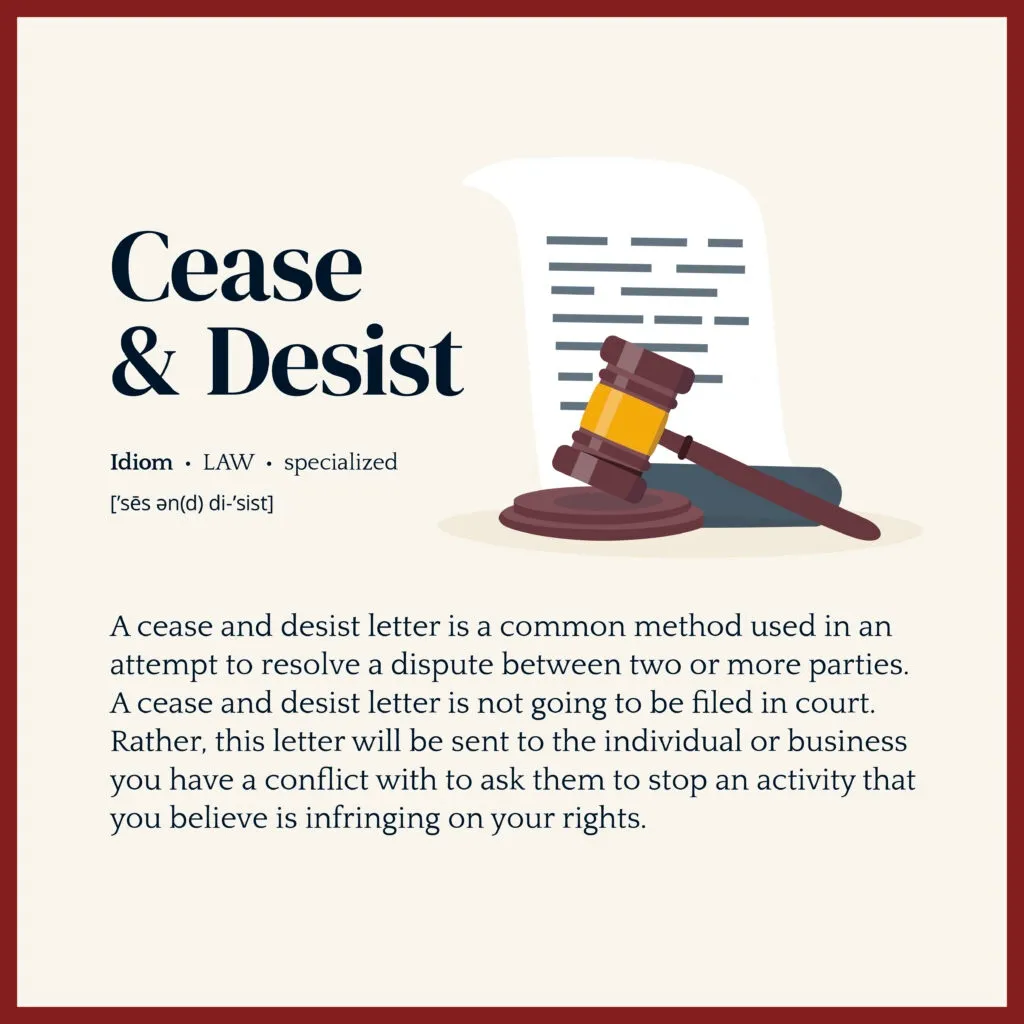
A cease and desist letter is a common method used in an attempt to resolve a dispute between two or more parties. A cease and desist letter is not going to be filed in court. Rather, this letter is sent to the individual or business you have a conflict with to ask them to stop an activity that you believe is infringing on your rights. A cease and desist letter is also commonly referred to as a “stop harassment letter” or a “demand letter.” If you are considering sending one or you have received one, the litigation team at Callahan & Blaine, PC can help you understand your options.

What a Cease and Desist Letter Is
A cease and desist letter is a written notice that identifies conduct the sender believes is unlawful or harmful and demands that the recipient stop. The letter usually describes the specific activity at issue, explains why it is a problem, and states that the sender may pursue legal action if the conduct continues.
Because the letter is not issued by a court, it does not compel anyone to act. Its value comes from the notice it creates. Once a party has been told in writing that their conduct is causing harm, it becomes much harder for them to later claim they did not know. That documented notice can strengthen a future claim if the matter proceeds to litigation.
How a Cease and Desist Letter Is Used
Cease and desist letters are used in a range of situations, and four scenarios are the most common. Each one involves conduct that the sender wants stopped before it causes further harm.
- Infringement of intellectual property rights. Whether the issue involves a copyright, trademark, or patent, ownership of intellectual property carries certain legal protections. If another individual or business uses protected work without consent, a cease and desist letter is often a quick way to demand that the behavior stop.
- Slander and libel. When someone spreads false statements that damage your reputation or your business, that conduct may amount to defamation. A cease and desist letter can be a first step toward stopping it.
- Harassment. A cease and desist letter can serve as a formal demand that a harasser stop their behavior. In some situations, it is safer to go directly to law enforcement or seek a restraining order, because a letter can sometimes provoke an adverse reaction.
- Debt collection. A person who is subjected to continuous calls from debt collectors may use a cease and desist letter to demand that the contact stop. These letters often cite the federal Fair Debt Collection Practices Act. The letter can stop the contact, but it does not eliminate the underlying debt.
Cease and Desist Letter vs. Cease and Desist Order
People often use these terms interchangeably, but they are not the same thing. The distinction matters, because one is a request and the other is a command.
A cease and desist letter is a private communication from one party to another. It carries no legal force on its own. A cease and desist order, by contrast, comes from a court or a government agency. An order must be followed, and ignoring it can lead to penalties, including contempt of court. If you receive a document labeled as an order rather than a letter, you should treat it with particular urgency.
Why Send a Cease and Desist Letter
Litigation can be time consuming and costly for everyone involved. Most people would rather resolve a conflict without going to court, and a cease and desist letter is often the quickest and least expensive way to attempt that.
A cease and desist letter also builds a record. By sending one, you create written evidence that you notified the other party of the alleged conduct. If that party continues after receiving notice, the letter can strengthen a later legal claim against them.
What Happens If Someone Ignores a Cease and Desist Letter
A cease and desist letter is usually not legally binding, so a recipient is under no automatic obligation to comply. Ignoring one, however, can lead to several outcomes.
- More letters. The sender may continue sending letters until they receive a response, and each one may become more forceful in tone.
- A lawsuit. Failing to respond can prompt the sender to file suit. If that happens, you may be served with a summons and complaint, which, unlike a letter, does require a response.
- A temporary restraining order. A temporary restraining order may accompany a summons and complaint. It can prevent you from performing a specific action described in the complaint until the court rules further.
How to Respond If You Receive a Cease and Desist Letter
If a cease and desist letter arrives in your mailbox, take it seriously. The first step is to contact an attorney with experience in the relevant field. Ignoring the letter entirely, or firing back a harsh response, is rarely in your best interest.
Even when the allegations are largely or entirely unfounded, the letter still deserves careful consideration. A party can move forward with legal action even when their claims are weak, so a measured, timely response can help keep the matter from escalating.
Do You Need a Lawyer to Send or Respond to a Cease and Desist Letter
There is generally no restriction on who can send a cease and desist letter, and an attorney is not strictly required. That said, a letter riddled with factual or legal errors, poor formatting, or a lack of credibility is unlikely to be taken seriously. Working with an attorney helps ensure the letter is accurate and carries weight.
The same is true when you receive one. An attorney can quickly gauge how serious a letter is. Some letters mean very little, while others signal a genuine threat of litigation. A lawyer can help you understand which is which and decide what to do next. For business disputes that begin with a letter and may lead to a claim, our team also handles related matters such as breach of contract disputes.
Cease and Desist Letters in California
Cease and desist letters are common in California business disputes. A company that finds its copyrighted work being used by another business, or a business owner facing false reviews from someone who was never a customer, may use a letter as a starting point to stop the conduct.
The effect of any given letter depends on the facts of the situation. On its own, a cease and desist letter carries no legal weight. It functions as notice that the recipient may be violating a contractual duty or the law, which is often enough to prompt them to stop. Once a person receives one, they can engage with the sender to resolve the matter, stop the conduct, or adjust their behavior to avoid a future dispute or court battle.
Contact Callahan & Blaine, PC About Your Dispute
Callahan & Blaine, PC brings over 40 years of litigation experience to business disputes throughout California. Whether you need to send a cease and desist letter or you have received one and are unsure how to respond, our litigation team can help you weigh your options and protect your interests.
If you are dealing with a dispute that may call for a cease and desist letter, Contact Us to Submit Your Potential Case. We will review the situation and help you determine the strongest path forward.