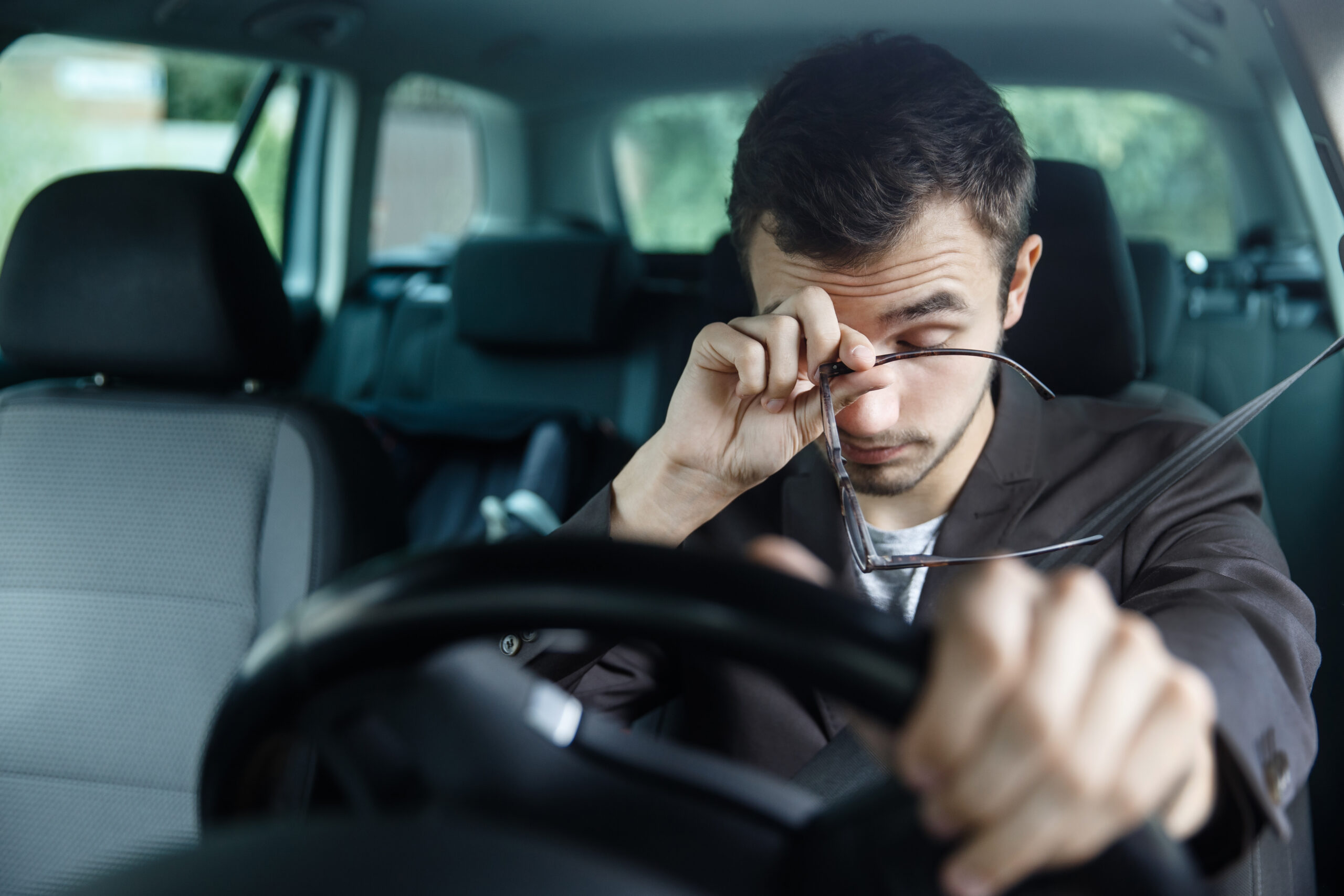
Most drivers would never get behind the wheel after a night of heavy drinking, yet those same drivers think nothing of getting on the freeway after 20 hours without sleep. What many people fail to recognize is that these two behaviors carry remarkably similar risks, and in some crash scenarios, fatigue may be the more unpredictable threat of the two.
Understanding how impaired driving in all its forms causes serious collisions is central to the work we do at Callahan & Blaine, PC. With 40 years of experience representing victims in California car accident cases and 29 senior trial attorneys on our team, we have seen firsthand how both fatigued and alcohol-impaired driving can devastate lives. If you or someone you love has been hurt by an impaired or fatigued driver, knowing what the research says about these two dangers can help frame the legal picture.
The Science Behind Fatigued and Drunk Driving
Research has long drawn a direct parallel between sleep deprivation and alcohol intoxication. According to the National Safety Council, driving after going more than 20 hours without sleep is the equivalent of operating a vehicle with a blood alcohol concentration of 0.08 percent, which is the legal limit in California and every other state. That comparison is not rhetorical. It reflects documented declines in reaction time, hazard awareness, and the ability to sustain attention.
Both conditions impair the brain in overlapping ways. Alcohol slows neural communication and distorts judgment. Sleep deprivation similarly degrades the frontal lobe functions that govern decision-making, self-monitoring, and risk assessment. The critical difference is that a fatigued driver has no visible signs of impairment, no odor on their breath, and no legal threshold for officers to test at the roadside. This makes fatigued driving harder to detect and, in many cases, harder to prove after a crash. For victims pursuing car accident negligence claims in California, this distinction matters enormously.
Crash Severity: What the Data Shows
Both fatigued and alcohol-impaired driving produce devastating outcomes on the road, and the numbers behind each tell a sobering story. The two sections below break down what research reveals about fatal crash rates and the resulting injury patterns.
Fatal Crash Rates
When measuring crash severity, the statistics for both behaviors are alarming. The CDC reports that in 2022, alcohol-impaired driving accounted for 32 percent of all traffic-related deaths in the United States, resulting in 13,524 fatalities. Research conducted by the AAA Foundation for Traffic Safety estimated that drowsy driving contributed to approximately 17.6 percent of all fatal crashes between 2017 and 2021, a figure representing roughly 30,000 deaths over those five years.
Drowsy driving crashes are also concentrated in high-risk time windows. The majority occur between midnight and 6 a.m. or in the late afternoon, when alertness naturally dips. These windows overlap with peak highway travel and commercial trucking routes, meaning the consequences when a fatigued driver loses control at high speed are often catastrophic. Our attorneys have handled cases involving drowsy truck drivers whose fatigue led to multi-vehicle collisions with life-altering outcomes.
Injury Patterns and Underreporting
One reason drowsy driving fatalities may be underestimated is the difficulty in documenting fatigue at a crash scene. Unlike alcohol impairment, which can be measured with a breathalyzer or blood test, fatigue leaves no chemical trace. Police reports historically identified drowsy driving in only about 1 to 2 percent of crashes, yet AAA re-evaluated those same crashes and found the true rate to be nearly 18 percent. This gap between reported and actual numbers has significant implications for how liability is established after a serious collision. Injury patterns in both types of crashes share common features: high-speed rear-end impacts, failure to brake before impact, and lane-departure crashes that result in rollovers or head-on collisions.
These are among the most severe accident types and frequently produce traumatic brain injuries, spinal cord damage, and fatalities. As the costs of impaired driving accidents make clear, the financial and physical toll on victims and their families extends far beyond the crash itself.
Legal Accountability for Both Forms of Impaired Driving
California law does not require a driver to be legally drunk to be held liable for a collision. A driver who chose to get behind the wheel knowing they had not slept in over a day, or who continued driving after recognizing signs of drowsiness, may have acted negligently in the eyes of the law. The key legal question is whether a reasonable person in the same circumstances would have recognized the risk and made a different choice.
Proving that negligence in court requires a detailed investigation. Our attorneys examine electronic logging device data in truck cases, cell phone records, witness statements about the driver’s condition before the crash, and medical records that may document sleep disorders or work schedules. A skilled personal injury lawyer can help maximize your compensation by building a case around the full scope of the driver’s impairment, whether that impairment came from a bottle or from a chronic lack of sleep.
Contact Callahan & Blaine, PC After a Serious Accident
At Callahan & Blaine, PC, we have built our reputation on taking on difficult cases and seeing them through. Our results include the largest jury verdict in Orange County history, $934 million; a $58 million insurance bad-faith judgment; and a $50 million personal injury settlement. We understand the physical, financial, and emotional toll a serious crash places on victims and their families, and we bring decades of trial experience to every case we handle.
If you were injured in a collision caused by a fatigued or impaired driver, do not wait to get legal advice. Use our contact form to reach our team and tell us what happened. We will review your situation and help you understand your options for pursuing the full compensation you deserve.